
International Day against Violence against Women and Girls
Since 1999, the United Nations has been calling for the International Day of Action for the Elimination of Violence against Women on November 25.
According to the World Health Organization (WHO), violence is one of the greatest health risks for women. It is the main cause of death or health impairment for women between the ages of 16 and 44, putting it ahead of cancer and traffic accidents (Frauen helfen Frauen, 2020).
Violence against women is diverse and on the rise
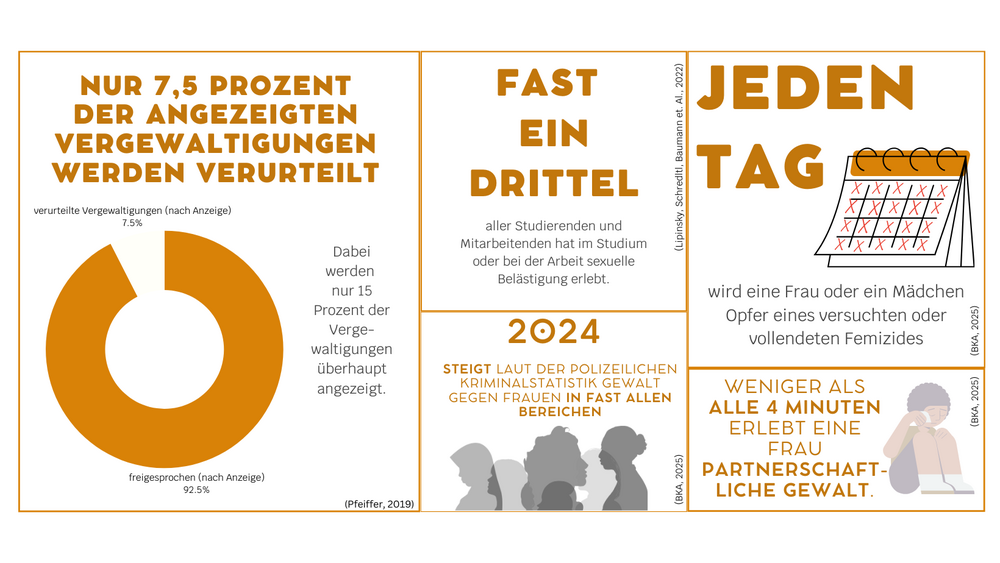
"Less than every 4 minutes, a woman [in 2024] experienced intimate partner violence", writes UN Women (2025). According to the Federal Criminal Police Office (BKA), 135,713 women in Germany were victims of intimate partner violence last year (BKA, 2025). In many areas, this year's police crime statistics even show an increase in violence against women compared to the previous year:
- Over 53,000 women were victims of sexual offenses1, an increase of 2.1 percent.
- The number of female victims of domestic violence2 rose by 3.5 percent to over 187,000.
- The number of female victims of digital violence3 rose by as much as 6 percent to a total of over 18,000 (BKA, 2025).
The figures from the police crime statistics only show a fraction of the violence actually experienced, as they only list cases that have led to reports or investigations. It can be assumed that the number of unreported crimes is significantly higher. Violence against women occurs in many different forms: both physically and psychologically - for example through stalking or economic dependence and pressure (Hellmann, 2023).
Violence against women who experience multiple forms of discrimination
In the context of violence against women and girls, it is important to adopt an intersectional perspective. This is because groups of women who experience different forms of discrimination at the same time may also be victims of different forms of violence more frequently and at the same time.
For example, according to the Federal Criminal Police Office's situation report, women without German citizenship make up 91.4 percent (N=163) of female victims of human trafficking for the purpose of sexual exploitation (BKA, 2025). Women without German citizenship also become victims of pimping (64.5 percent, N=141) and forced prostitution (62.6 percent, N=289) way more frequently than those with German citizenship (BKA, 2025). If one considers that the proportion of women without German citizenship in the overall female population is only around 14% (DeStatis, 2025), the overrepresentation becomes even clearer.
Women who experience intersectional discrimination due to their gender and disability are also more frequently exposed to violence. In the study "Life situation and burdens of women with impairments and disabilities in Germany" conducted by the Federal Ministry of Education, Family Affairs, Senior Citizens, Women and Youth between 2009 and 2011, 58-75% stated that they had experienced physical violence. This is almost twice as many as the average number of women in the population (BmBFSFJ, 2014). The same applies to sexual violence: 21-43% of respondents stated that they had experienced sexual assault in their adult life. This is two to three times as many as the female population average (BmBFSFJ, 2014). The wide range in the percentages is due to the different living environments of the respondents.
Origin of the day of remembrance: The Mirabal sisters
The origins of the International Day against Violence against Women and Girls can be traced back to the abduction and killing of the three sisters Patria, Minerva and Maria Teresa Mirabal. Together with others, they resisted Trujillo's dictatorship in the Dominican Republic in 1960. After a failed uprising, all those involved were imprisoned. While the three women were released after a short time, their husbands remained in prison. On their way to visit the prison on November 25, the three sisters were murdered in a car accident staged by Trujillo (Pruitt, 2021).
The sisters have been remembered on the anniversary of their deaths since 1981; since 1999, the United Nations has officially called for the International Day for the Elimination of Violence against Women (Aktion Deutschland Hilft, 2021). In 1993, the United Nations defined violence against women as gender-based violence for the first time in a joint declaration on the elimination of violence against women (UN, 1994). Criminologist Prof. Deborah F. Hellmann, who teaches and researches at the University of Applied Sciences for Police and Public Administration in North Rhine-Westphalia, explains that this term recognizes "that women face an increased risk of becoming victims of various forms of violence due to their gender." (2023)
Protection from violence against women
At international level, states are increasingly trying to combat violence against women. An important step in the protection of women was the "Istanbul Convention", which came into force in 2011. It is a "Council of Europe Convention on preventing and combating violence against women and domestic violence" (bpb, 2020). It is the first transnational agreement to include protection against violence for women, stronger prevention measures and more intensive prosecution. Germany ratified the Istanbul Convention in 2017, so the convention has also been in force here since February 2018. Prior to this, German criminal law on sexual offenses was reformed in 2016 and the principle of "no means no" was enshrined in law (ibid.). In 2019, the International Labor Organization (ILO) supplemented the ILO Convention against Violence at Work (DGB, 2019). For the first time, the convention created binding international minimum standards for protection against violence and sexual harassment in the workplace.
The annual situation reports "Gender-specific crimes against women" published by the Federal Criminal Police Office since 2024 also provide an overview of misogynistic crimes and are intended to make figures transparently accessible. In this way, they contribute to raising public awareness of the issue.
______
1In Germany, Section 177 of the Criminal Code (StGB) states that anyone who "against a person’s discernible will, performs sexual acts on that person or has that person perform sexual acts on them, or causes that person to perform or acquiesce to sexual acts being performed on or by a third person" is guilty of sexual assault or rape (Criminal Code Section 177 (1)).
2The Federal Criminal Police Office defines "domestic violence" as acts of violence in which the victim and perpetrator are "in a family or partnership relationship" (BKA, 2025). Violence between ex-partners also falls into this category. For classification as domestic violence, it is not relevant whether the persons are actually living in the same household at the time of the offense (BKA, 2025).
3"Digital violence" is used as a collective term for acts of violence that use "technical aids and digital media (cell phones, apps, internet applications, emails, etc.)" and "violence that takes place in the digital space, e.g. on online portals or social platforms" (Frauen gegen Gewalt e.V.).

Activities in Dortmund
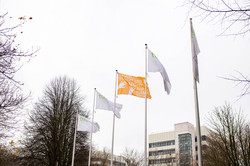
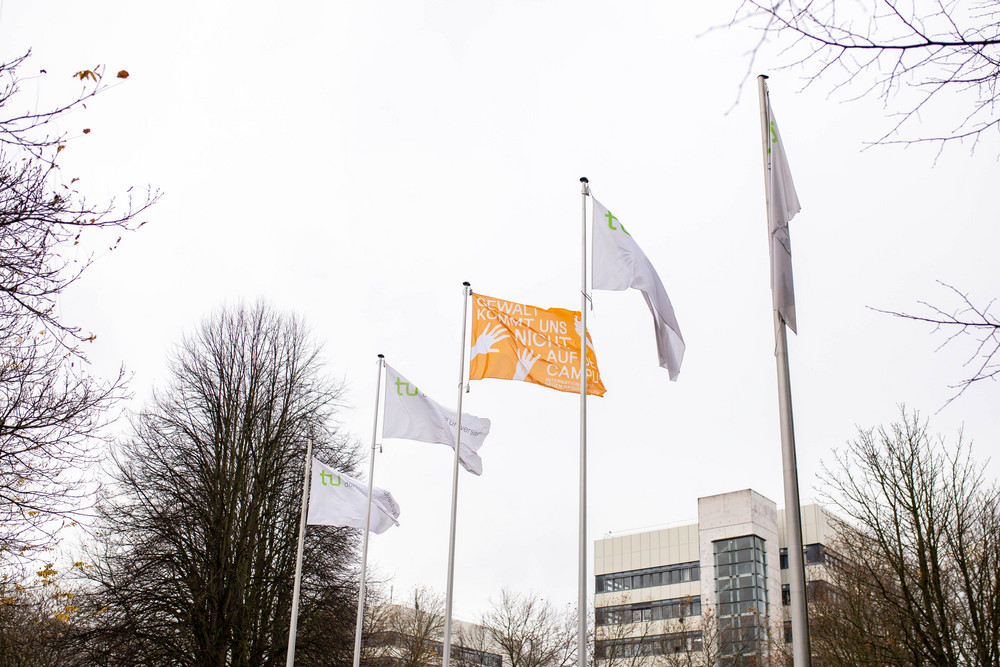
In Dortmund, attention is drawn to violence against women every year on November 25. With the "Orange the World" campaign, numerous companies and organizations set a publicly visible example. Buildings are illuminated in orange or decorated with orange flags to take a clear stand against violence against women and girls. Orange flags will also be flying on the TU Dortmund University campus on November 25 and the Math Tower will be illuminated in orange.
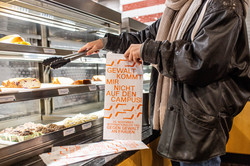
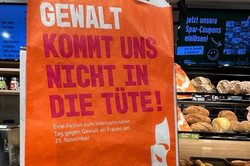
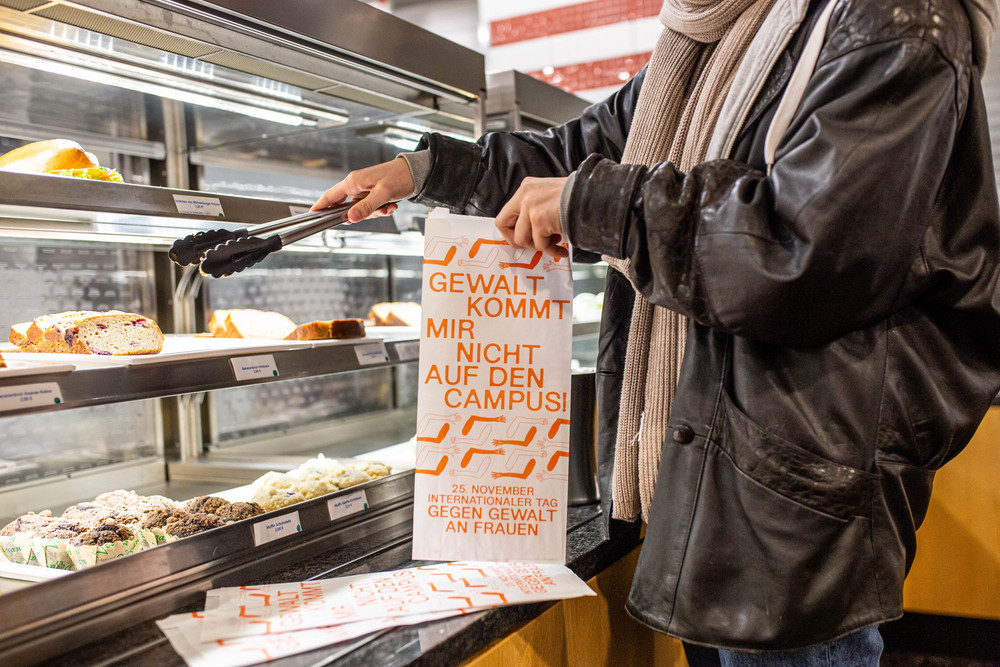
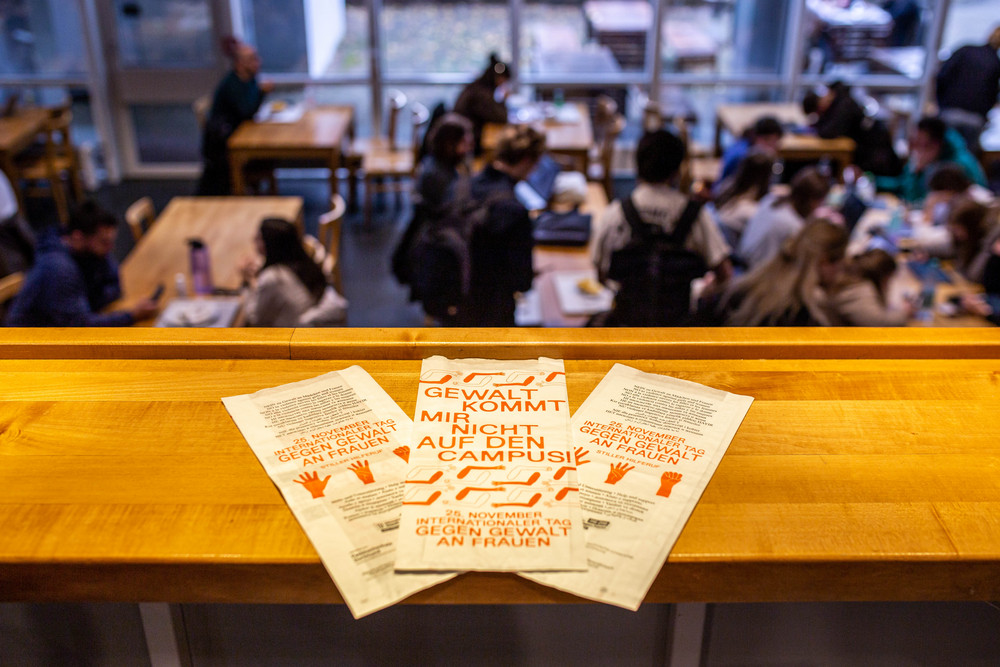
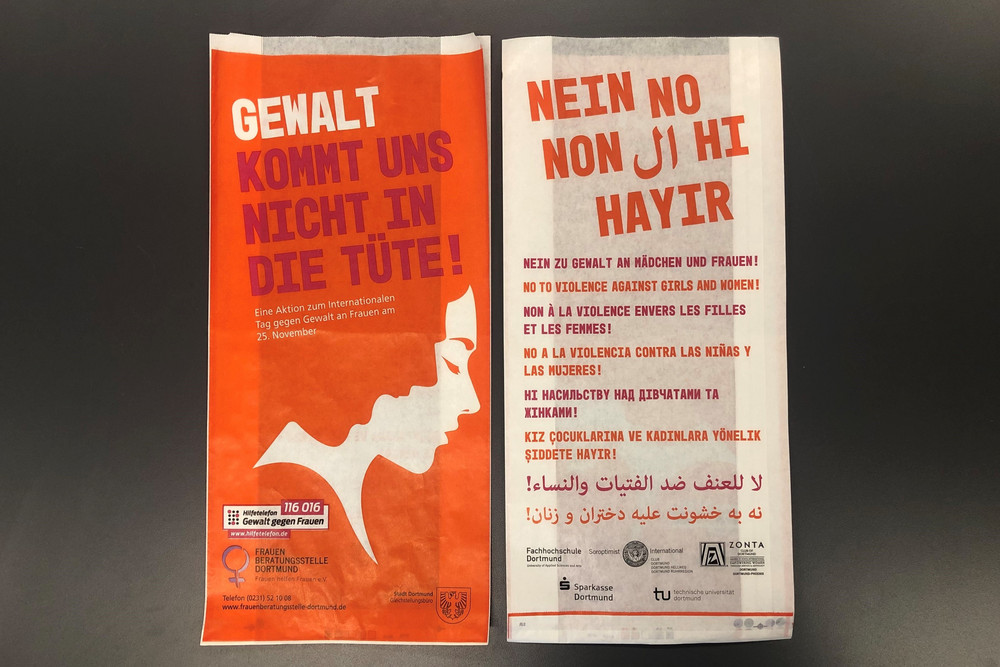
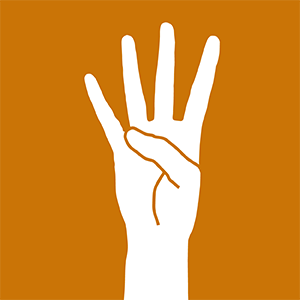
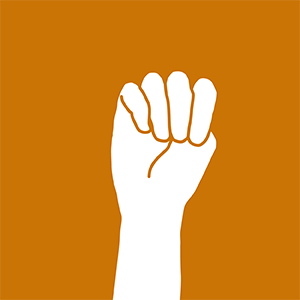
In addition, TU Dortmund University, together with the Studierendenwerk and the Dortmund and South Westphalia Universities of Applied Sciences and Arts, will once again be running the campaign "Gewalt kommt uns nicht in die Tüte" in November. In all canteens and cafeterias, sandwich bags will be handed out with the telephone number of the help hotline for violence against women and a picture of the "silent call for help". With this hand sign, victims of violence can signal for help inconspicuously. This year, colleges and universities throughout North Rhine-Westphalia are taking part in the campaign.
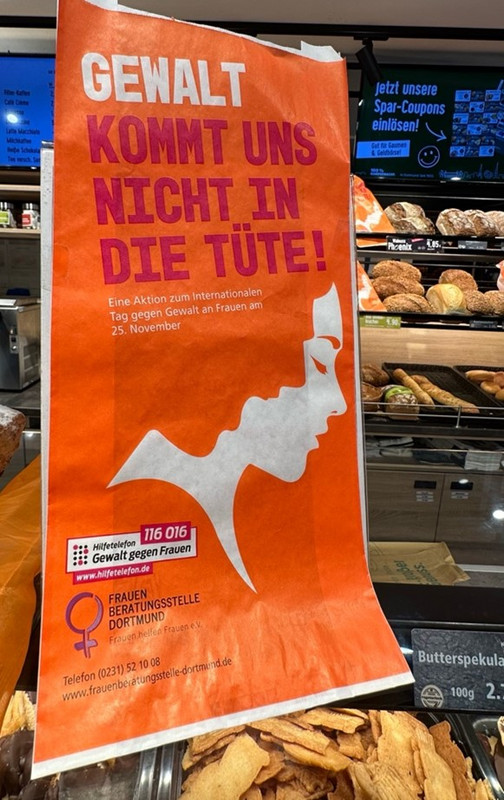
In Dortmund, cafés, bakeries, the Abo-Kiste and the Tafel are packing their baked goods in bread bags, which are also intended to raise awareness of the International Day against Violence against Women and Girls. TU Dortmund University is also part of the campaign alliance here.
The "Orange the World" campaign also includes the "Orange Days", which run from November 25 to December 10. The State Conference of Equal Opportunities Officers of the Universities and University Hospitals of North Rhine-Westphalia (LaKof) is offering a series of digital and hybrid lectures on topics such as digital violence against women, incels and consent. Participation is free of charge.
More information and registration for the LaKof lectures
The Equal Opportunities Office of the City of Dortmund is also offering a number of events as part of the Orange Days, for example a lecture and panel discussion on the topic of femicide.
Events organized by the Equal Opportunities Office of the City of Dortmund
-
-
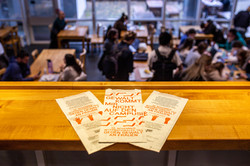
In addition to the campaign slogan, information on the topic of violence against women and help services are printed on the sandwich bags. -
-
-
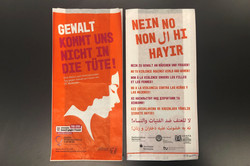
The municipal bread roll bag for November 25th.
Help offers for those affected
Those affected can contact the Central Advice Centre for Protection against Discrimination and Sexualized Violence (SchuDS). Counseling is open to all members and guests of TU Dortmund University. It is confidential and can also be anonymous.
The "Violence against women" help hotline is a nationwide advice service for women who have experienced or are still experiencing violence. Counselors support victims of all nationalities, with and without disabilities, by telephone and online - 365 days a year, around the clock, in 18 languages. Relatives, friends and professionals can also seek advice anonymously and free of charge.
Tel: 116016
Women's Counseling Center Dortmund
Märkische Straße 212-218
44141 Dortmund
Tel: 0231/521008
Women's shelter Dortmund
Tel: 0231/800081
E-Mail
Women's counseling center Witten
Augustastraße 47
58425 Witten
Tel: 02302/52596
E-Mail
Wildwasser Bochum e. V.
Phone: (0234) 79 45 652
Women's counseling center Gelsenkirchen
Robert-Koch-Str. 18
45879 Gelsenkirchen
Tel: 0209/36163691 and 0209/36163692
Silent cry for help
With this hand signal, threatened persons can inconspicuously make themselves known to others and ask for support. To do this, with the hand raised, the thumb is placed inwards over the palm of the hand and visibly enclosed in a fist with the fingers. It is important to spread knowledge about this hand signal so that people affected can get help.

Status: November 2025
Sources
- Aktion Deutschland Hilft (2021): "Internationaler Tag zur Beseitigung von Gewalt gegen Frauen". Aktion-deutschland-hilft.de. Letzter Zugriff: 23.08.2023.
- Blakemore, E. (25. November 2024). How three sisters took down a dictator in the Dominican Republic. National Geografics. Letzter Zugriff: 24.11.2025
- Bundeskriminalamt (BKA, 2025): „Bundeslagebild 2024 - Geschlechtsspezifisch gegen Frauen gerichtete Straftaten“ . Bka.de. Letzter Zugriff: 24.11.2025.
- Bundesministerium für Bildung, Familie, Senioren, Frauen und Jugend (BmBFSFJ, 2014): "Lebenssituation und Belastungen von Frauen mit Beeinträchtigungen und Behinderungen in Deutschland". Bmbfsfj.bund.de. Letzter Zugriff: 21.11.2025.
- Bundeszentrale für politische Bildung (bpb, 2020): "Internationaler Tag zur Beseitigung von Gewalt gegen Frauen". Bpb.de. Letzter Zugriff: 23.08.2023.
- DeStatis – Statistisches Bundesamt (DeStatis 2025): Bevölkerung nach Nationalität und Geschlecht. Destatis.de. Letzter Zugriff: 24.11.2025.
- Deutscher Gewerkschaftsbund (DGB, 2019): "ILO-Übereinkommen gegen Gewalt und sexuelle Belästigung am Arbeitsplatz beschlossen". Frauen.dgb.de. Letzter Zugriff: 23.08.2023.
- Frauen helfen Frauen e. V. (2020): "Gewalt gegen Frauen". Frauenhaus-dortmund.de. Letzter Zugriff: 23.08.2023.
- Hellmann, D. (02. März 2023). Gewalt gegen Frauen in Deutschland. Bundeszentrale für politische Bildung. Letzter Zugriff: 24.11.2025.
- Pruitt, Sarah (2021): "How the Mirabal Sisters Helped Topple a Dictator." History.com. Letzter Zugriff: 23.08.2023.
- Russel, D. (2001). Femicide in Global Perspective.
- Strafgesetzbuch § 177 (1): "Strafgesetzbuch (StGB). §177 Sexueller Übergriff; sexuelle Nötigung; Vergewaltigung". Gesetze-im-internet.de. Letzter Zugriff: 23.08.2023.
- United Nations (UN, 1994): "Declaration on the Elimination of Violence against Woman". Letzter Zugriff: 11.11.2024.
- Vielfalt Mediathek (o. J.): Intersektionalität. Letzter Zugriff 22.04.2025.